
JR Yoichi Station (Mar. 2026)
Chap.3 The Politics of Regulation in Public Transportation: Structures, Actors, and Policy Dynamics
Public transportation is a policy domain in which regulation has historically played a central role. Railways, aviation, and bus and taxi services have long been subject to extensive government oversight to ensure passenger safety and preserve their public service function. Since the 1990s, however, wider trends of deregulation have relaxed entry and fare controls, expanding the discretion of transport operators. More recently, structural pressures such as population decline, driver shortages, and rising energy costs have renewed attention to regulatory frameworks. This chapter analyzes the structure and political foundations of regulation in public transportation. It shows that economic regulation (e.g., entry and fare controls) and social regulation (e.g., safety and environmental standards) coexist and are often closely intertwined. Regulation is also not limited to legal rules but includes a broader set of instruments such as economic incentives and information provision, with industry associations playing an important mediating role in Japan. At the same time, regulation is shaped by political processes involving interest groups and policy communities, and is vulnerable to rent-seeking and regulatory capture. Both deregulation and re-regulation can generate unintended consequences, making the balance between competition, safety, and sustainability a persistent challenge. Ultimately, regulatory design raises normative questions about whose interests are protected, extending debates beyond technical issues to democratic legitimacy and administrative effectiveness.
Column 1. Who Should Support Public Transport? Defining the Services Society Should Guarantee
Public transport does more than take people from one place to another. It enables people to travel to work, school, and medical appointments. It also provides mobility for those who cannot drive and supports local economies. Its benefits extend beyond passengers to society as a whole. This raises an important question: who should support public transport when fares alone cannot cover operating costs, and why? One approach is the concept of a Public Service Obligation (PSO). Under such arrangements, public authorities require transport operators to provide services that society needs and compensate them for the costs involved. However, keeping a route open is not enough. Authorities must also decide what level of service people should be able to rely on. This includes how often trains and buses run, what hours they operate, and how easily passengers can make connections. Public authorities and transport operators therefore need to agree on the services to be provided, how costs will be shared, what service levels must be maintained, and how performance will be checked. These agreements can be set out in contracts or other formal arrangements. Public support for transport should mean more than covering financial losses. It requires clear decisions about which services society should guarantee, who should provide them, and who should pay. Setting out these responsibilities and regularly reviewing actual performance can help ensure that public transport meets people's needs as those needs change.

Yoichi Eki-mae Juji-gai (Mar. 2026)
Chap.4 Stranded on the Local Bus? — The Quest for Integrated Regional Mobility in Japan
This chapter examines the challenges of regional public transportation in Japan through the lens of a popular television program depicting long-distance travel using only local bus services. While primarily entertainment, the program highlights a structural problem: the difficulty of completing continuous interregional travel via fragmented local bus networks. The central question is why bus routes fail to connect seamlessly. The answer lies not in isolated operational inefficiencies but in broader structural change. Declining ridership driven by population ageing and decline, increased private car use, and the COVID-19 pandemic has weakened the financial base of local bus services. This has led to route reductions, service fragmentation, and persistent driver shortages. Policy responses include efforts to reconfigure regional transport networks, improve resource efficiency, and introduce digital and data-driven tools. However, these reforms face significant constraints, including fragmented governance across municipalities and operators and the difficulty of coordinating system-wide restructuring. Regional transportation is thus not merely a mobility service but a foundational infrastructure sustaining local communities. Ensuring its viability requires coordinated efforts among national and local governments, operators, and residents to design context-specific systems. By using a media narrative as an analytical entry point, the chapter sheds light on the institutional and political challenges of achieving integrated regional mobility in contemporary Japan.
Column 2. Free Public Transport: Who Pays, and How Should It Be Evaluated?
In France, some local governments have made public transport free to encourage its use. Montpellier Méditerranée Métropole, for example, introduced free public transport for all residents in December 2023. The policy fulfilled a campaign pledge by Michaël Delafosse, the city’s Socialist mayor, who presented free transport as a way to combine social equity with environmental goals. Such policies aim not only to reduce transport costs for passengers, especially vulnerable groups, but also to encourage people to switch from cars to public transport, reduce environmental impacts, and revitalize city centers. However, making public transport free does not eliminate the costs of maintaining vehicles and infrastructure, recruiting drivers, or providing regular services. In France, one source of funding is the Versement Mobilité, a transport levy imposed on eligible employers. This system reflects the idea that employers, as well as passengers, should contribute to public transport because it supports commuting, business activity, and the wider regional economy. French transport authorities also plan for mobility across different modes, including trams, buses, walking, and cycling. Good policy therefore requires more than securing funding. Authorities need to connect planning, implementation, and evaluation. Free public transport should be assessed by examining whether it increases ridership, encourages people to switch from cars, and creates additional financial burdens for local government. Evaluation helps authorities understand the effects of their policies and make better decisions in the future. Ultimately, deciding who pays for public transport is inseparable from deciding how the money is spent and what the policy is expected to achieve.

Roadside Station Ishikari Ai-Road Atsuta (Mar. 2026)
Chap.5 Public Transport and Spatial Governance in Depopulating Japan
This chapter examines regional public transport in Japan as a form of spatial governance under demographic decline, focusing on Hokkaido. Beyond cost efficiency, transport policy in depopulating regions is closely tied to territorial cohesion, state spatial organization, and democratic legitimacy. Depopulation, ageing, spatial dispersion, and labour shortages have fundamentally altered both demand and supply conditions, producing structural constraints that market mechanisms alone cannot resolve. In Hokkaido, these challenges are intensified by its strategic roles in food security, logistics, and industrial policy, all of which depend on reliable transport connectivity. Transport governance operates across multiple levels — national, prefectural, municipal, and private — but fiscal capacity and administrative responsibility are often misaligned. This creates persistent tensions between local autonomy and the functional need for network coordination, as illustrated by JR Hokkaido. The chapter argues that regional transport policy should be understood as a process of rescaling governance and redefining state space. In depopulating societies, transport decisions effectively determine which regions remain viable, making transport policy a key site where autonomy, redistribution, and democratic legitimacy intersect.
Column 3. Who Should Support Local Transport? Lessons from France and Germany
In France, responsibility for regional rail services has been transferred from the national government to the regions (régions). Regional authorities can decide which trains to run and what level of service to provide, taking local needs into account. This raises a broader question: which level of government should be responsible for public transport, and how should that responsibility be shared? However, giving regions the power to make decisions does not, by itself, ensure that unprofitable rail routes can remain open. Securing adequate funding and maintaining essential services remain major challenges. Germany offers a different approach through its Verkehrsverbünde, or regional transport associations. These associations bring together transport operators and local authorities to coordinate fares, timetables, and connections across a region. Their aim is to make public transport easier to use, even when different operators or modes are involved. Inspired by the German experience, the idea of a Hokkaido-style transport association has also been considered in Japan. Any such arrangement, however, needs to reflect local conditions and the responsibilities of the organizations involved. These examples highlight two key issues in local transport policy: how much responsibility public authorities should take for providing services, and how transport operators and municipalities can work together. France and Germany offer different ways of approaching these challenges. In Hokkaido, communities are spread across a large area, winters are severe, and the population is declining. Securing transport for local residents requires clear responsibilities and practical ways for local authorities and transport operators to cooperate across the region.
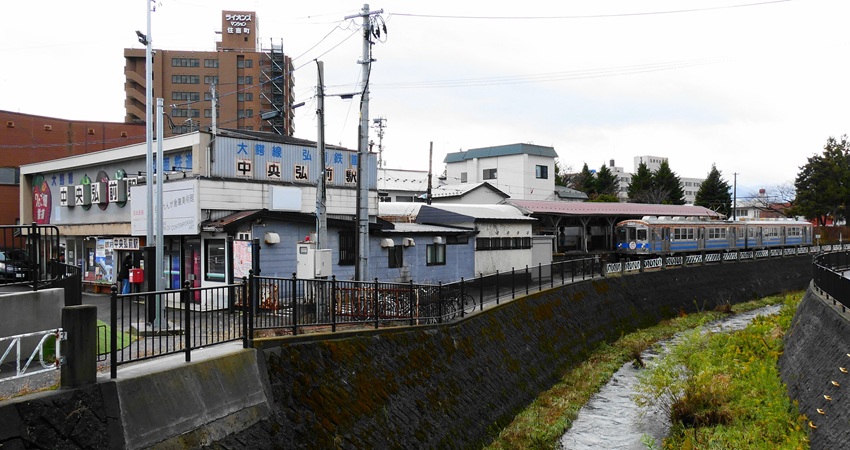
Konan Tetsudo, Owani Line (Nov. 2025)
Chap.12 Public Transportation and Technological Innovation: A Political and Governance Perspective
This chapter examines the relationship between technological innovation and public transportation from a political and governance perspective. It first traces the historical development of transport technologies, emphasizing their close connections with military research and the persistent dual-use nature of innovation. It then analyzes Japan’s innovation governance structure, where government agencies, academia, public research institutions, and private firms interact within a fragmented but partially coordinated system. Particular attention is given to the roles of regulation, standardization, and intellectual property regimes in shaping technological trajectories. The chapter further discusses emerging policy frameworks such as Responsible Research and Innovation (RRI) and Ethical, Legal and Social Implications (ELSI), alongside recent developments including digital transformation, autonomous mobility, and the integration of space–transport systems. These trends highlight the growing interdependence between technological change and policy design. Finally, the chapter addresses the persistent challenge of bridging the gap between research and social implementation. It underscores the importance of public–private collaboration, the role of academia, and governance capacity in enabling sustainable transport innovation under broader societal transformation.
Column 4. Are Ticket Gates Necessary? Institutional Choices and Social Values in Fare Collection
Public transport systems in Europe vary across countries and modes, but trams and buses often use a proof-of-payment (PoP) system. Passengers purchase and validate tickets and present them for inspection when required. This differs from the gate-based systems commonly used on Japanese railways, where access is controlled by automatic ticket gates. Each system involves trade-offs between costs and risks. Ticket gates require investment in station infrastructure and ongoing maintenance. PoP systems can reduce infrastructure requirements and facilitate boarding, but they require ticket inspections and measures to deter fare evasion. They may also result in lost fare revenue. The relative merits of each approach depend on factors such as passenger volumes, boarding frequency, fare levels, the incidence of fare evasion, and the effectiveness of ticket inspections. The broader question is how much society should spend to prevent fare evasion. Should it invest heavily in infrastructure and personnel to minimize violations, or accept some risk in exchange for more efficient operations and greater convenience? These choices reflect not only economic considerations but also social judgments about compliance with rules and appropriate enforcement. However, differences in ticketing systems should not automatically be attributed to national character or culture. The choice between these systems illustrates how societies balance costs and risks when deciding what public transport should look like. (Reference: Sasaki, Yasuo (2014), Optimal Choices of Fare Collection Systems for Public Transportations: Barrier versus Barrier-free, Transportation Research Part B: Methodological, 60, pp. 107–114.)
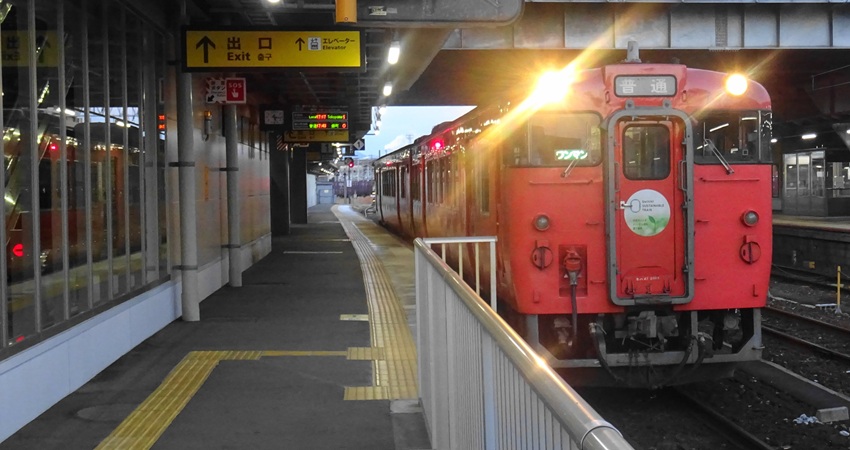
Iwakuni Station (Jan. 2025)